In today’s digital age, where mobile devices dominate our daily lives, the demand for applications that can function across multiple platforms—be it Android, iOS, or web—has surged. Businesses aim to reach as many users as possible without incurring the time and costs associated with developing separate apps for each platform. This is where cross-platform application development steps in, offering a solution allowing developers to create apps that run on multiple platforms with a single codebase.
Cross-platform development has evolved significantly, making it a popular choice for startups, small businesses, and even large corporations. In this article, we will explore what cross-platform app development entails, its benefits, challenges, and some popular tools used in this space. By the end, you will have a clear understanding of whether cross-platform development is the right choice for your next project.
source: developer on rent
What is Cross-Platform Application Development?
The various platforms that exist for smartphones such as Android, iOS, Windows, etc. each have their own unique coding. And in order to run an app on any of these platforms, they need to match the platform's coding. If they don’t the app will not be able to run on any platform other than the one it is originally suited for.So by definition, cross-platform app development refers to the act of developing an app which is fit to run on more than one platform meant for smartphones.There was a time when cross-platform app development did not exist. As a result, iOS apps would not be available to Android users, and the luscious Android games could not be played by iPhone users. However, the ability to play a video game is only a tiny fraction of the benefits that cross-platform app development can provide you with. Here are some of the major ones.
source: tvisha
Benefits of Cross-Platform Development
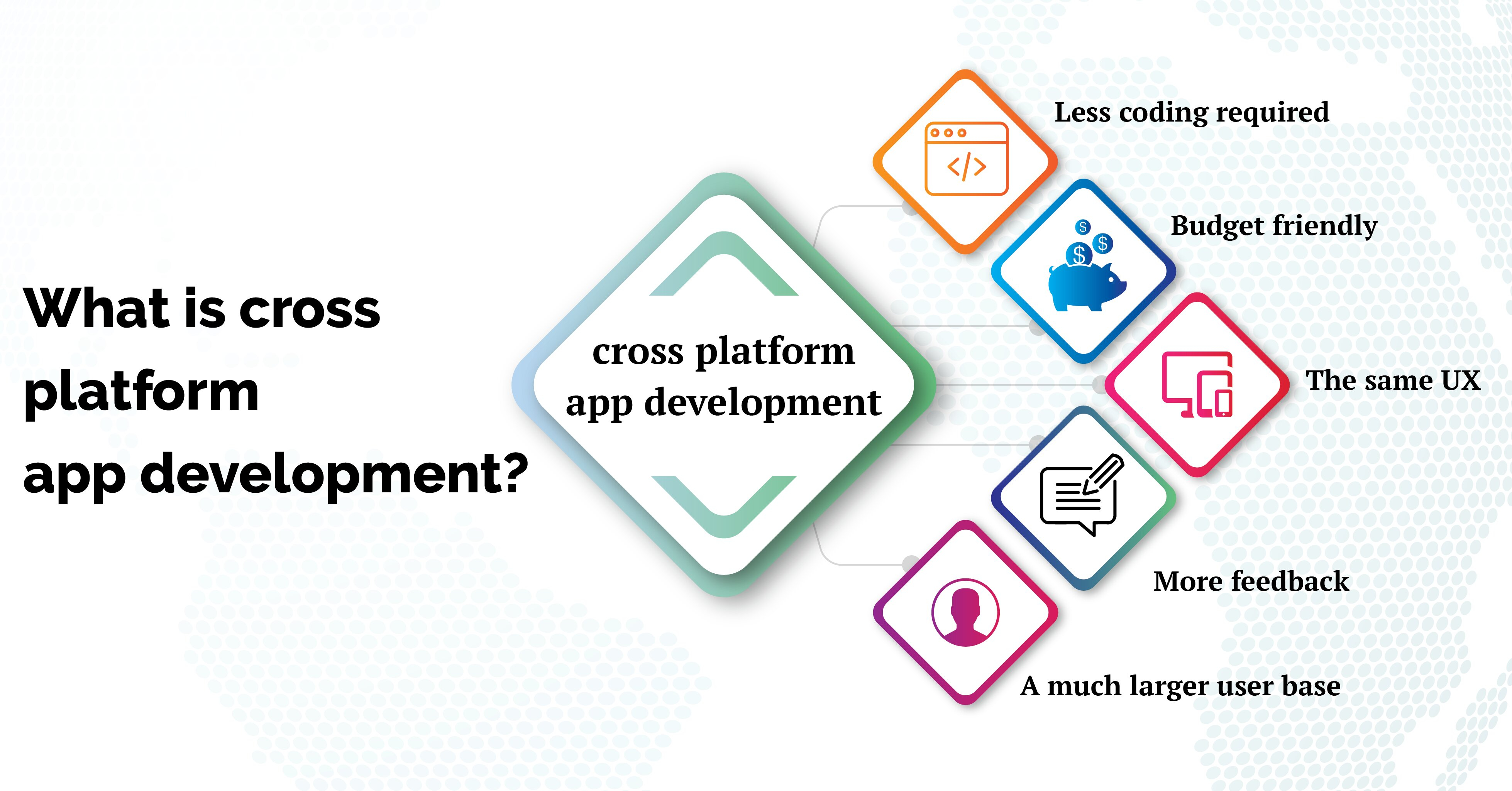
1. Less Coding Required
While it may sound like ensuring an app runs on all platforms will require a lot of coding, it is actually not so. Once you have figured out what the coding for a certain platform will be like, you can go ahead and reuse that piece of coding to fit your other apps under the cross-platform umbrella. So, the process is not really effort-oriented.
The truth is that most apps did not develop cross-platform attributes since they wanted their app to be tied in with the platform, but the business approach soon changed as the profitability factor weighed in on cross-platform attributes.
2. Budget-Friendly
Recent developments in technology have allowed for apps to be developed with a cross-platform orientation right from the beginning. So, in order to fit your app into all three major platforms developing the app all over for each platform is no longer required. You can develop the app only once and ensure that it fits into all the digital spaces.
However, if you are developing an app that will have to fit into spaces that have different design requirements, then the design will need to be done freshly.
3. The Same UX
If you are trying to develop the same app multiple times, chances are that its UX quality will take a drop. This is because once you start the process afresh it is really hard to duplicate the same results.
The users, however, will expect the app to remain the same in case they make a switch between platforms. The only way to do this is by hiring a hybrid app development company that will create the app only once and ensure that the same UX is maintained by taking a cross-platform approach.
4. More Feedback
Let’s accept one thing first; no app out there is perfect. But that does not mean that they can not try to be so. Every app has a feedback option integrated into it using which the user can let the developer know what the app is missing or where it is going wrong. Pushing up the number of feedbacks a prototype or beta stage app receives is perhaps one of the biggest benefits of cross-platform app development. This not only allows for a quick and fast updating of the app, but it also provides data from a variety of users and thus ensures that you can make platform-centric updates if need be.
5. A Much Larger User Base
This should come as no surprise but it is indeed the primary reason why most developers are aiming for cross-platform usability of the apps they develop. It’s basic maths, to be honest. Instead of making an app available for only a single platform you are developing it for ‘x’ number of platforms.
And thus, the number of people using your app will also increase in size keeping ‘x’ as the ratio. Even number of mobile platforms are being developed and are entering the market to pose as a competitor to Android and iOS, and making use of these platforms for launching your app can help you target a fresh audience and increase your profit margins.
Cross-platform app development is clearly the trend that will set the future of app development. Almost all apps that were once upon a time available for only one platform have now all integrated themselves into other platforms. This has also been a huge boon for video game apps as they have received a user base like never before.
Popular Tools for Cross-Platform Development
Several development frameworks and tools have emerged to simplify cross-platform app development. Here are some of the most popular ones:
1. React Native
When we talk about the best cross-platform application frameworks in the market, it is impossible to not mention React Native. This framework is the developers’ preferred as it has many remarkable features. It is used for writing code and offers native-like mobile applications. It is made on JavaScript which works well on both iOS and Android. Many businesses rely on React Native and prefer it as their app development framework.
JavaScript provides a benefit to developers in writing modules in Swift, Objective-C, or other Java languages. Using the libraries and native components in this framework, programmers can also complete heavy actions like video processing, image editing, and much more.
source: vocso
2. Flutter
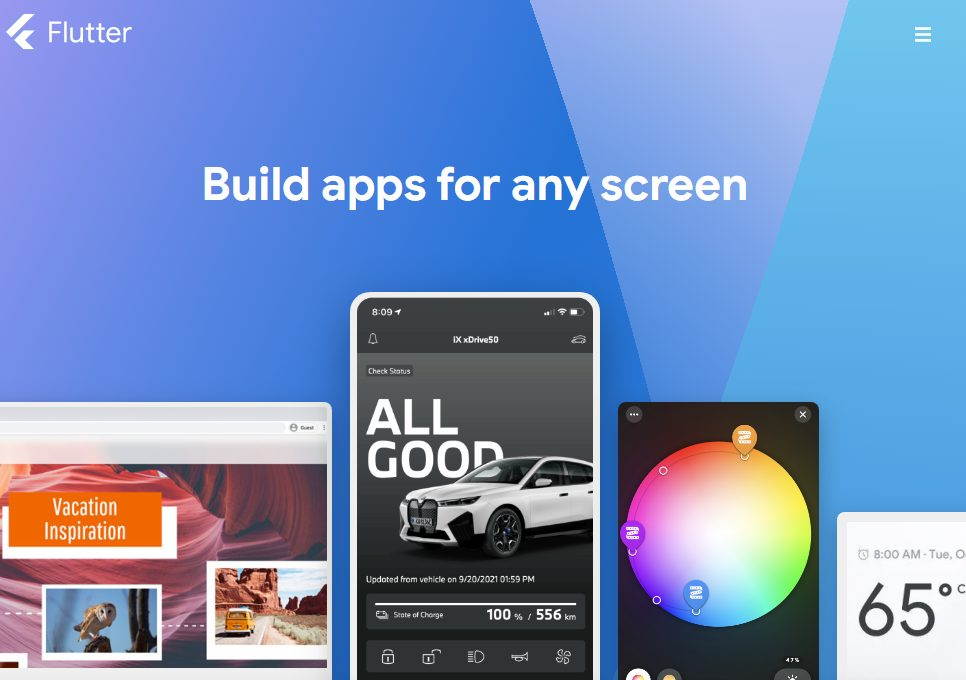
Flutter was introduced by Google in the year 2017. It is an impressive cross-platform app framework that runs effectively across multiple platforms. It is a software development gear that allows developers to create apps for Android and iOS.
Applications made using the Flutter framework have shown evident gains for businesses. The performance of applications built with this framework is fast and better functioning. Instead of JavaScript, it uses Dart programing language which makes it distinct from other frameworks. Developers can see code adjustments in real-time.
source: vocso
3. Xamarin
Developed in the year 2011, Xamarin is an open-source platform. This cross-platform application development framework is quite different from other frameworks on the list. It is an efficient framework that is used for creating fully-functioning applications for Android, iOS, and Windows with .Net and C# instead of JavaScript and HTML. Xamarin allows developers to build native-like apps with amazing APIs.
source: vocso
4. Ionic
Ionic is another popular framework that allows developers to build apps using web technologies like HTML, CSS, and JavaScript. Ionic is especially popular for hybrid apps that can be deployed across mobile devices and web browsers.
 source: vocso
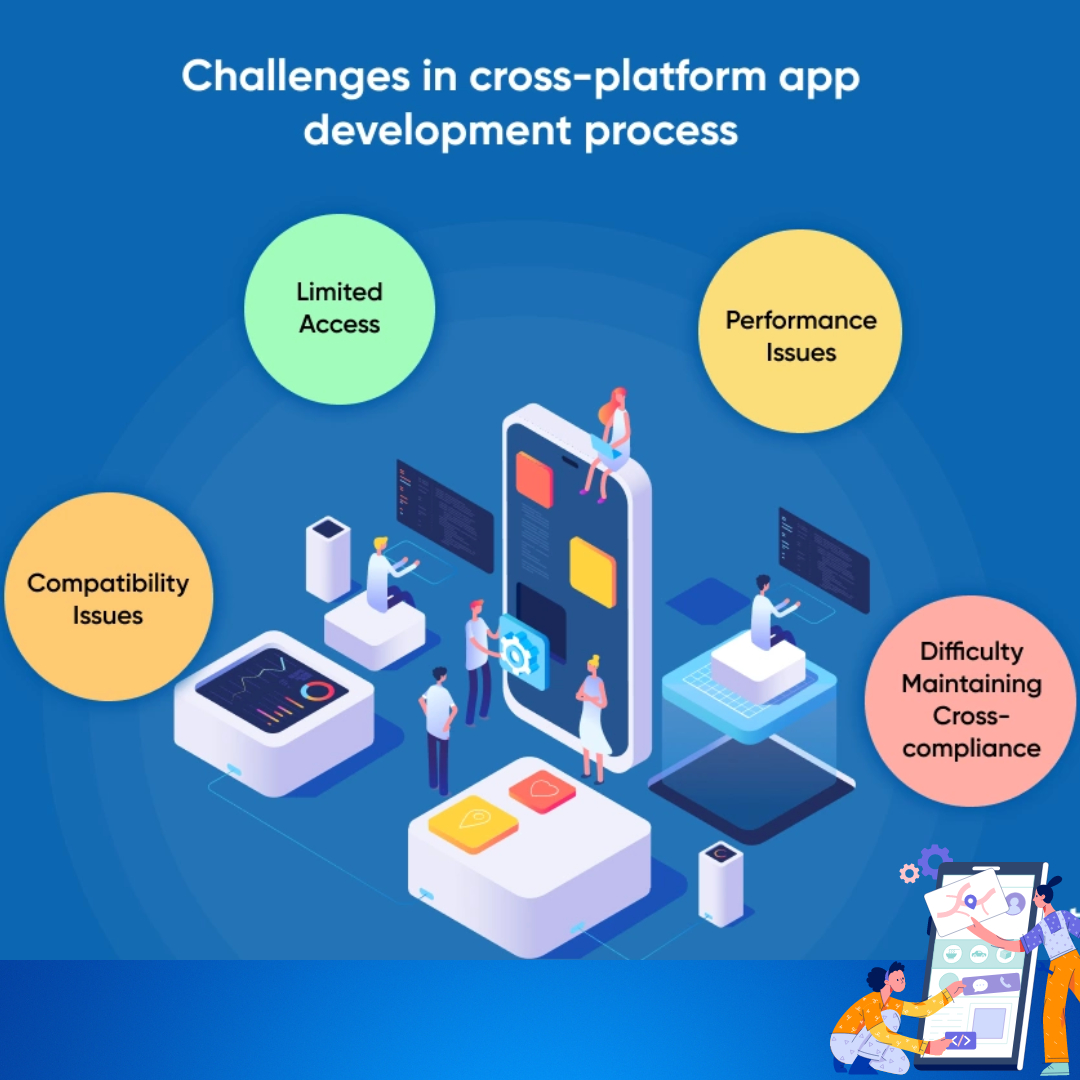
Challenges in cross-platform app development process
source: net solutions
A few years ago, cross-platform app development was constrained to making simple mobile apps and games. Over time, emerging technologies have made cross-platform development more adaptable, powerful, and flexible.
1.Compatibility issues with different operating systems and devices
When discussing cross-platform mobile app development, compatibility can be challenging. Such issues may arise when the apps running on the devices aren’t designed to support them. This can lead to performance issues.
2.Limited access to device hardware features
Cross-platform frameworks operate differently on multiple devices. It can be problematic to use the features of each device. This is majorly due to the tools not having direct access to the hardware of those devices.
3.Performance issues compared to the native app
Performance hiccups because of inconsistent communication between the native and non-native components of gadgets.
4.Difficulty keeping up with updates to operating systems and devices
Cross-platform app developers have difficulty maintaining cross-compliance of apps across devices and operating systems.
Some of the other challenges cross-platform development faces are –
- Cross-platform app developers have difficulty maintaining cross-compliance of apps across devices and operating systems.
- Performance-related glitches can lead to poor user experience.
- If a business app manages part of a corporation and stores the user’s data, then going for cross-platform apps is not always a good idea due to security concerns.
However, these challenges are minimal compared to the benefits of cross-platform app development.
Future of Cross-Platform Development
The demand for cross-platform applications will only increase as more businesses seek cost-effective solutions to reach wider audiences. Emerging technologies like AI, AR, and VR are also likely to shape the cross-platform development space, pushing frameworks to adapt to more sophisticated and immersive user experiences.
As cloud computing and 5G networks become more widespread, cross-platform apps will benefit from faster data transfer rates, reduced latency, and improved real-time processing capabilities. These advances will make it easier for cross-platform apps to compete with native apps in terms of performance and functionality.
Conclusion: Is Cross-Platform Development Right for Your Business?
Cross-platform development has evolved to offer businesses a powerful tool for reaching a broader audience while saving on costs and time. However, it’s essential to consider the nature of your app, your target audience, and your business goals before making a decision.For businesses looking to build apps with simple to moderately complex functionality, cross-platform development is a great choice. It allows for faster development cycles, reduced costs, and a unified user experience across devices. However, if your app requires top-tier performance, complex animations, or platform-specific features, native development might be more suitable.
Call to Action: Are you considering developing a cross-platform app? Assess your app’s requirements, and explore frameworks like Flutter, React Native, and Xamarin to determine the best fit. Whether you choose cross-platform or native development, make sure your app delivers a seamless and engaging experience to your users across devices.
 {{notif.ago}}


.png)


 {{rtype.reaction_name}}
 {{rtypes[comment.reaction.reaction_type].reaction_name}}
 Reply
Reply  {{rtypes[subComment.reaction.reaction_type].reaction_name}}


